Tankless Water Heaters in Benson: Will One Fit Your Gas Line, Vent and Water?
An on-demand heater changes what the house needs from its gas line, vent and electrical supply as well as how hot water arrives. Phone the dispatcher and one of our plumbers working in Benson will talk through whether the home can support one before any quote is written.
Call (520) 340-7175 Tankless answersOpen late and early, every day
Tankless or tank: what actually changes for the household
A tankless unit heats water as it flows instead of storing it, so it does not run out while one person showers, but it can run short when several fixtures open at once. Flow, not storage, sets the limit, and the unit's rating describes how much water it can heat by a given amount at a given rate. The gains are space and a steady supply for a single long draw. The trade-offs are a more demanding installation, annual maintenance and a short delay before hot water arrives.
| Question | Tank unit | Tankless unit |
|---|---|---|
| What limits hot water? | The size of the stored volume | How many fixtures run at once |
| What does installation involve? | Often a like-for-like swap | Larger gas line or higher electrical load, new venting, often a condensate drain |
| What maintenance matters? | Flushing, anode, relief valve | Annual descaling and filter cleaning |
| What happens in a power outage? | A gas tank with a standing pilot still heats | Most units need electricity even when gas-fired |
For a conventional replacement instead, see a conventional tank replacement. If you are comparing the two for a specific house, ask the plumber to estimate peak flow, meaning the most fixtures you run at the same time.
Before installation: gas, venting and electrical must be confirmed
Three questions decide whether a tankless unit can go where the old tank sits. First, can the gas line supply enough volume? Tankless burners draw more gas than a tank, so a line sized for a tank may be too small, and gas piping work may be part of the quote. Second, can the unit be vented as the manufacturer requires, through a wall or roof, with the right pipe and clearance? Third, is there power for the controls, a nearby outlet or a circuit for an electric model?
- Ask for the gas line size and the length of run, and whether the meter capacity was considered.
- Ask what vent material, route and termination point the plumber plans to use.
- Ask where condensation will drain, since high-efficiency units produce acidic condensate.
- Ask whether the work needs a permit by calling the Building Department, (520) 720-6328.
Installation: what the job involves
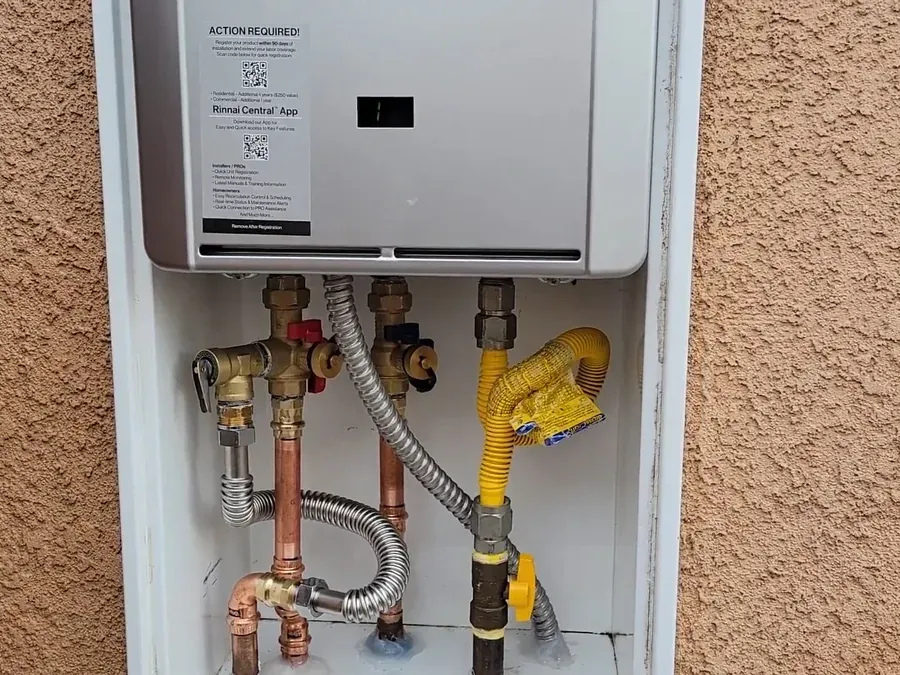
Installation typically means mounting the unit on a wall, connecting water and gas or electrical supply, running a vent, adding isolation valves for later flushing, and adding a drain for condensate. Isolation valves matter: with them, a plumber can descale the heat exchanger without cutting pipe. A pressure relief valve and a gas shutoff belong on the job as well.
Replacement or conversion from a tank
Converting an existing home from a tank to tankless is mostly a piping and venting job. The old tank, its flue and its relief pipe come out. New gas sizing, a new vent route and a wall location are laid out. The plumber should explain how much of the old system is reused and what has to be rebuilt.
Gas or electric tankless
Gas models deliver the highest flow but need venting and gas capacity. Electric models avoid a vent but need a very large electrical load, which can exceed what an older panel provides. The right choice follows what the house can support, so ask for the panel and gas capacity to be checked first.
Flushing and descaling: let the water test set the schedule
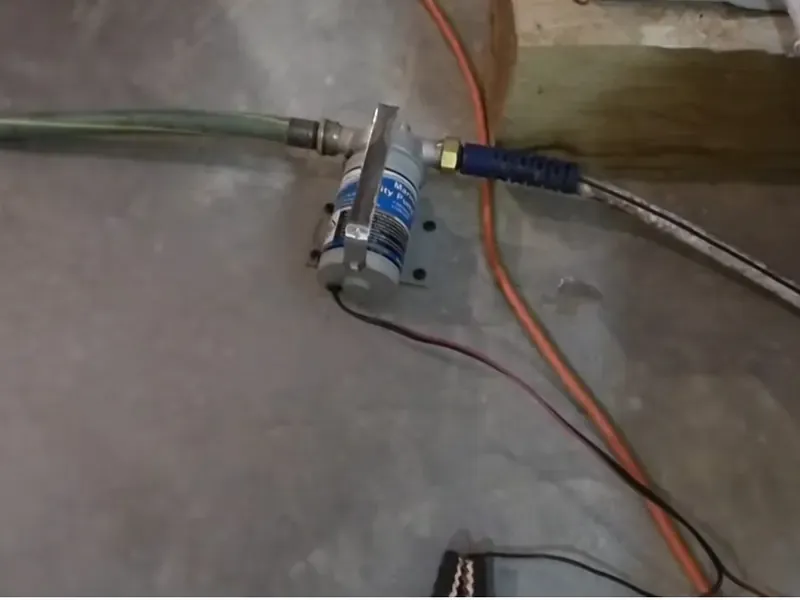
Minerals in water build scale inside the heat exchanger, narrowing the passages, lowering flow and raising the temperature of the metal. Descaling means circulating a mild acid solution, usually vinegar or a manufacturer-approved cleaner, through the unit with a pump and the isolation valves. How often depends on how hard the water is.
The City of Benson draws groundwater from wells, and its 2025 water quality report gives no hardness figure. That leaves no published number to build a schedule on. A tap test, or a call to the Water System on 520-720-6336, is the only way to get one, and the result sets the interval; if the test shows hard water, treatment options if the test shows hard water are covered on the filtration page. Source: City of Benson water quality report for 2025, checked 2026-10-30.
Troubleshooting a tankless unit that will not heat
Most units display an error code, and the manual lists what each one means. The common causes are a blocked vent or air intake, a dirty filter on the cold inlet, a flow that is too low to trigger the burner, scale on the heat exchanger and a failed igniter or sensor. Hot water that goes cold when a second fixture opens usually points to demand rather than a fault. Some units can be reset by turning the power off for a minute.
When it is a repair rather than replacement depends on the part and the age of the unit. Ask what failed, whether the part is available and what the unit would need if it were replaced instead. Compare that with the cost drivers of tank repair for a conventional unit, which are different.
Brands: how to compare without choosing by name
No brand is right for every house. Compare how easily parts can be obtained locally, whether a plumber on the team has installed that model before, what vent materials the maker requires, the maker's coverage terms for the heat exchanger and the electronics, and how a unit handles low flow. A plumber who recommends a model should explain which of those points drove the recommendation.
Questions about tankless units
Which tankless brand should I choose?
There is no single right brand. Compare parts availability nearby, installer familiarity with the model, the vent type it needs and the maker's coverage terms. Ask the plumber which of those points led to the recommendation.
How do I flush or descale a tankless water heater?
The plumber closes the isolation valves, connects a pump and hoses to the service ports, and circulates a descaling solution through the heat exchanger before flushing it with clean water. The valves make this possible without cutting pipe. Because hardness is not published for Benson water, test the tap before choosing how often.
Can a tankless unit reuse my existing gas line and vent?
Sometimes. A tankless burner draws more gas than a tank, and it usually needs a different vent. The plumber should check the gas line size and run length and the vent route before quoting.
What are the signs that a tankless water heater needs repair?
Cold water between hot bursts, an error code that returns after a reset, reduced flow, noise from the heat exchanger and a unit that will not ignite. Scale and a blocked filter cause many of these and are cleaned, not replaced.
Thinking about going tankless?
Phone the dispatcher, say what you have now and what you want to change, and one of our plumbers working in Benson will review the gas, vent and electrical needs.
Call (520) 340-7175 Contact details